Sculpture
Kinetic Infinity Mirror
A motorized infinity mirror built for House of Yes in Brooklyn. Programmable LED patterns multiply into infinite depth through two-way glass, while a hidden motor slowly rotates the inner mirror to shift the geometry in real time.
An infinity mirror fools your eyes into seeing depth where there is none. Two parallel surfaces — a standard mirror and a sheet of two-way glass — trap light between them, bouncing it back and forth. Each reflection is slightly dimmer than the last, producing a tunnel that appears to recede forever into the wall. The object is only a few inches deep, but the illusion is bottomless.
This one was built for House of Yes, the legendary nightclub and performance venue in Bushwick, Brooklyn. What sets it apart from the infinity mirrors you've seen on Instagram is that it moves. A hidden motor slowly rotates the inner mirror assembly, and when it does, the entire infinite corridor of reflections twists and spirals in real time. The geometry never settles. It breathes.
Design & Fabrication
The LED strips are individually addressable — each segment can be set to any color. Each pattern reads differently as it multiplies through reflection — what starts as a few colored lines on a frame becomes a dense, kaleidoscopic structure twenty reflections deep. And because the inner mirror rotates independently of the pattern, the same configuration never looks quite the same twice. The rotation means each successive reflection is offset by a small angle from the one before it, turning straight lines into spirals and flat geometry into something that feels three-dimensional.
The enclosure is a shallow box — just deep enough to house the mirror sandwich, LED channels, motor, and all the wiring, but thin enough to hang flush against a wall. The front face is two-way glass. The back panel opens for motor access and electronics maintenance. The optical stack from front to back: two-way glass, air gap with LED strips, standard mirror mounted to a gimbal driven by servos. The whole unit had to be robust enough to survive a nightclub — vibration, humidity, accidental contact, indefinite runtime.
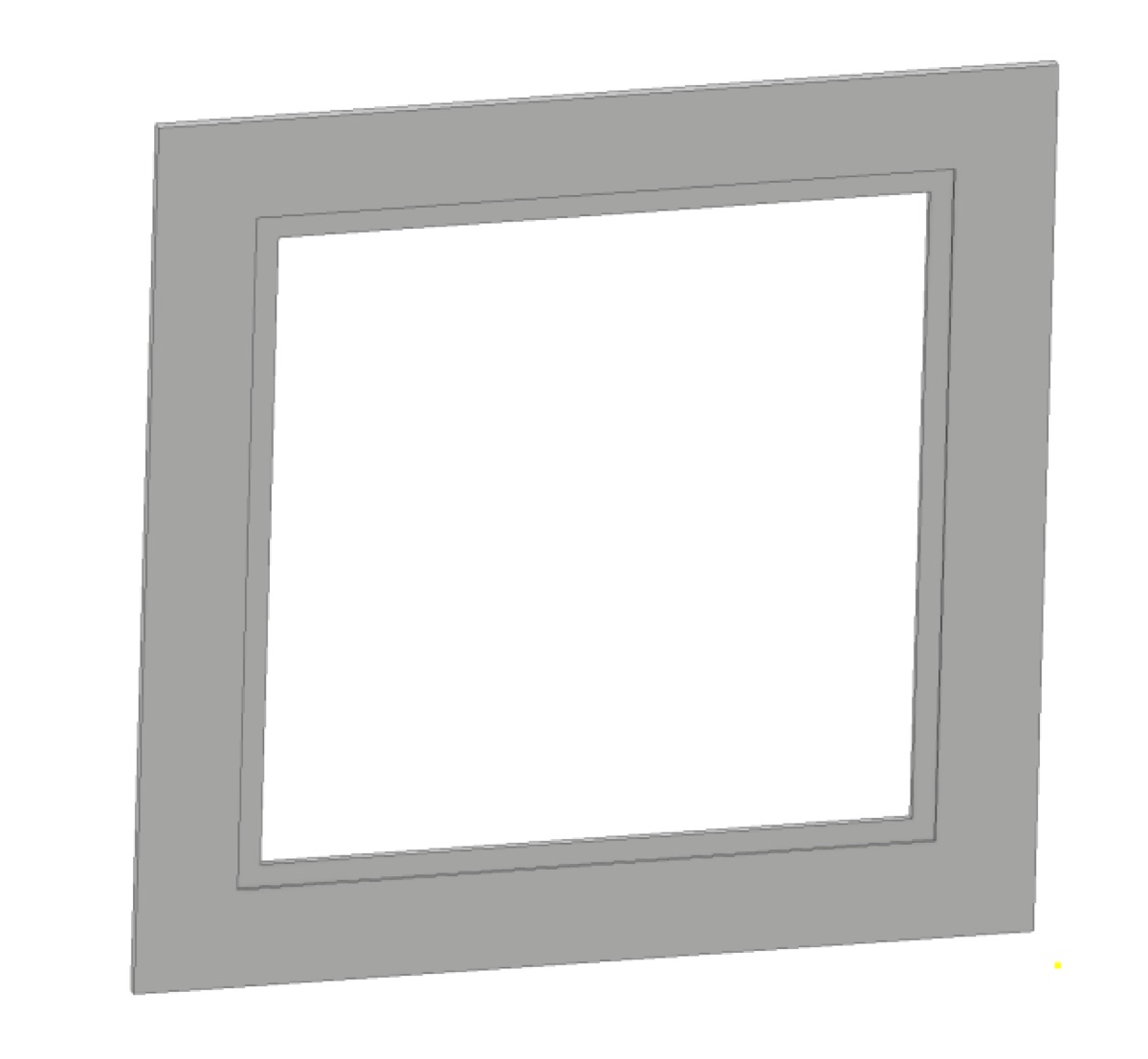
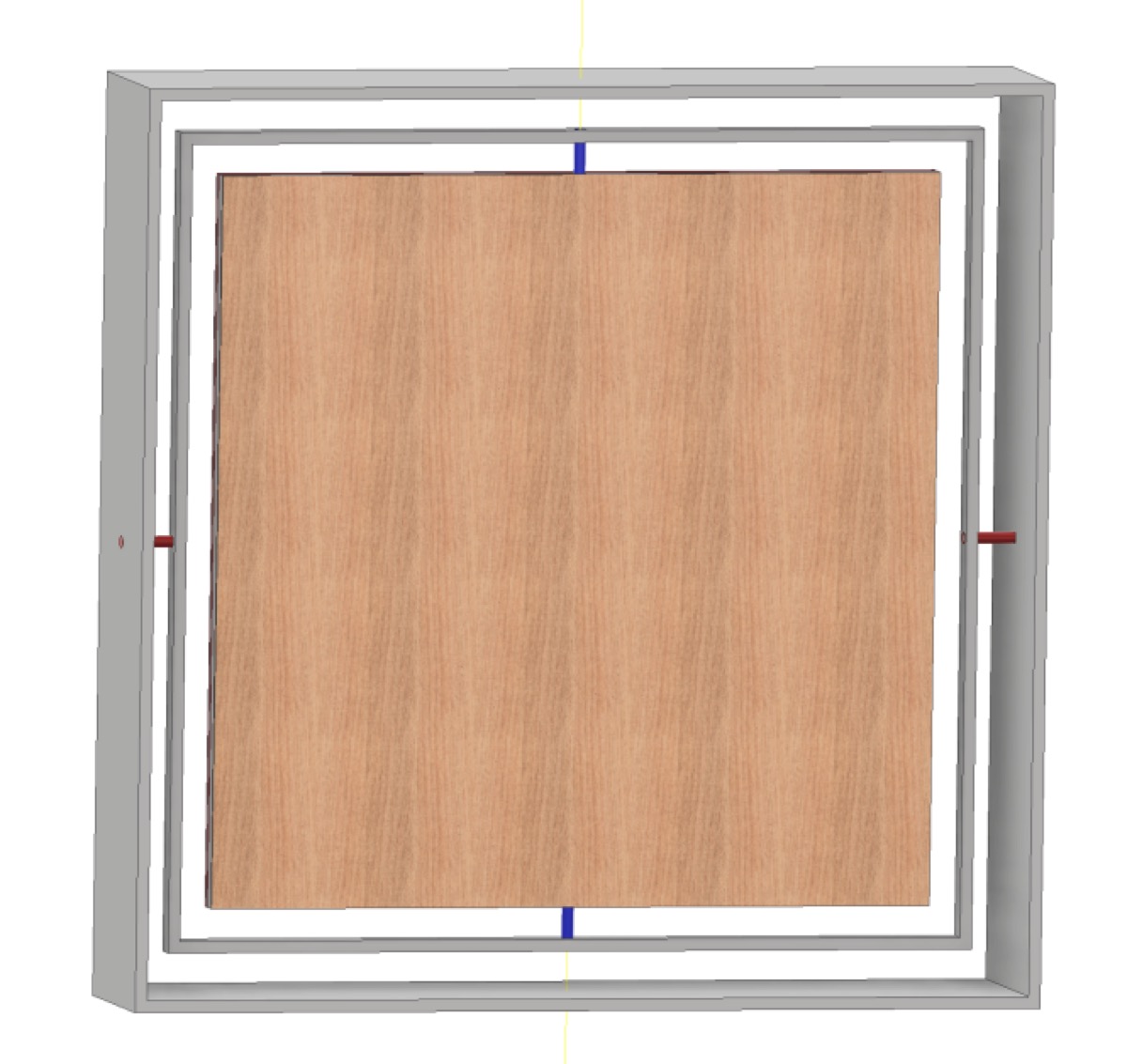
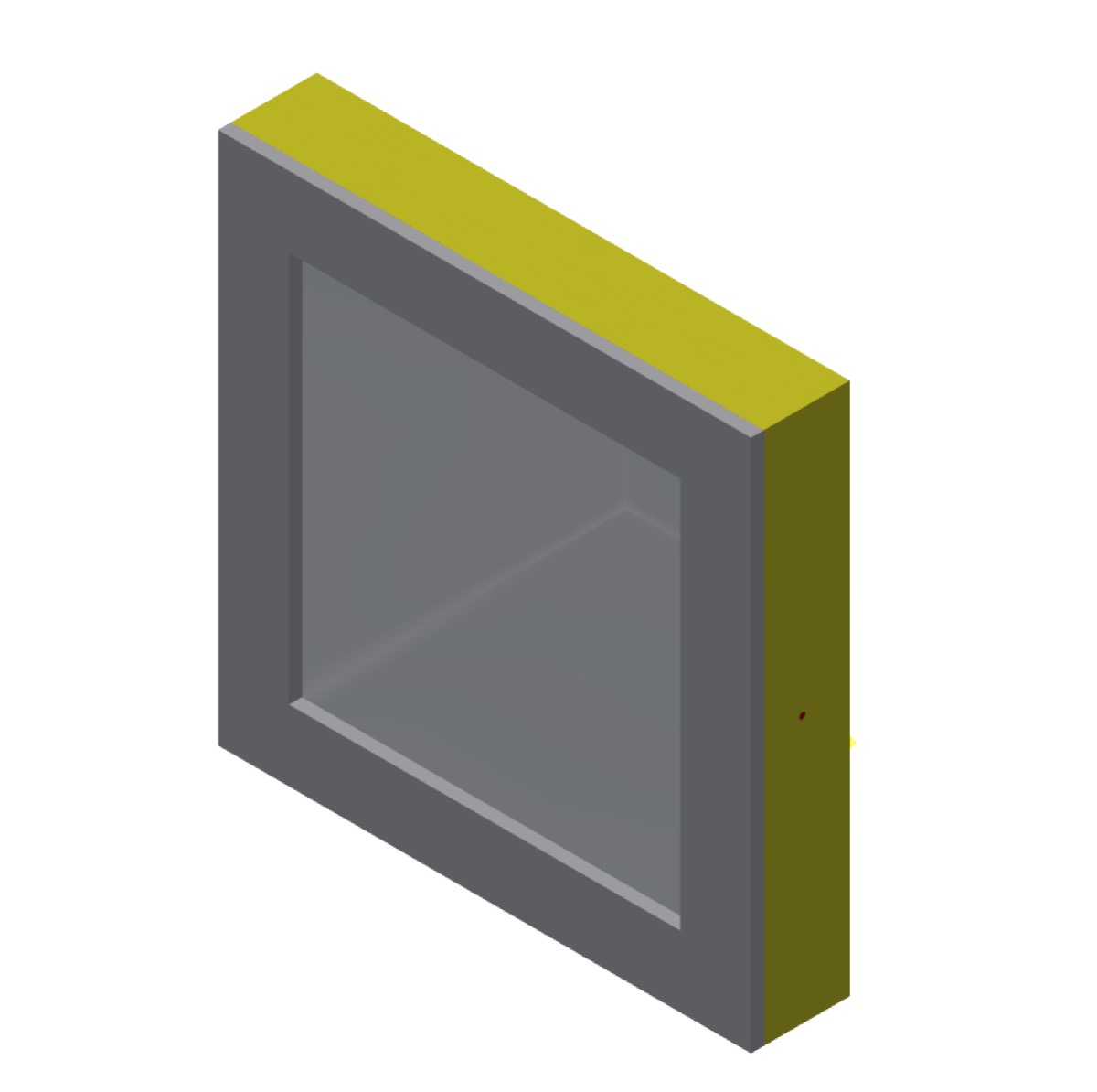
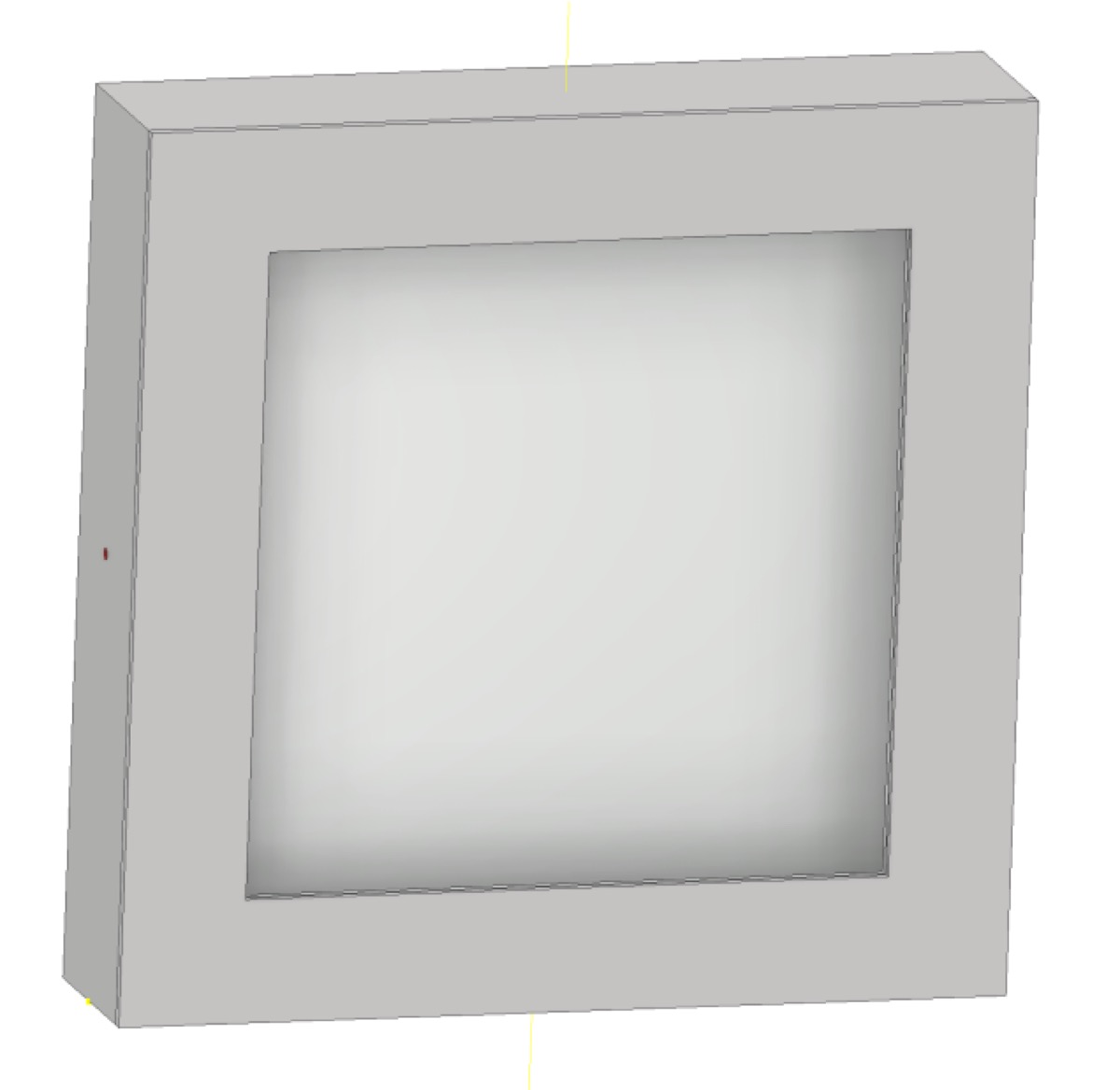
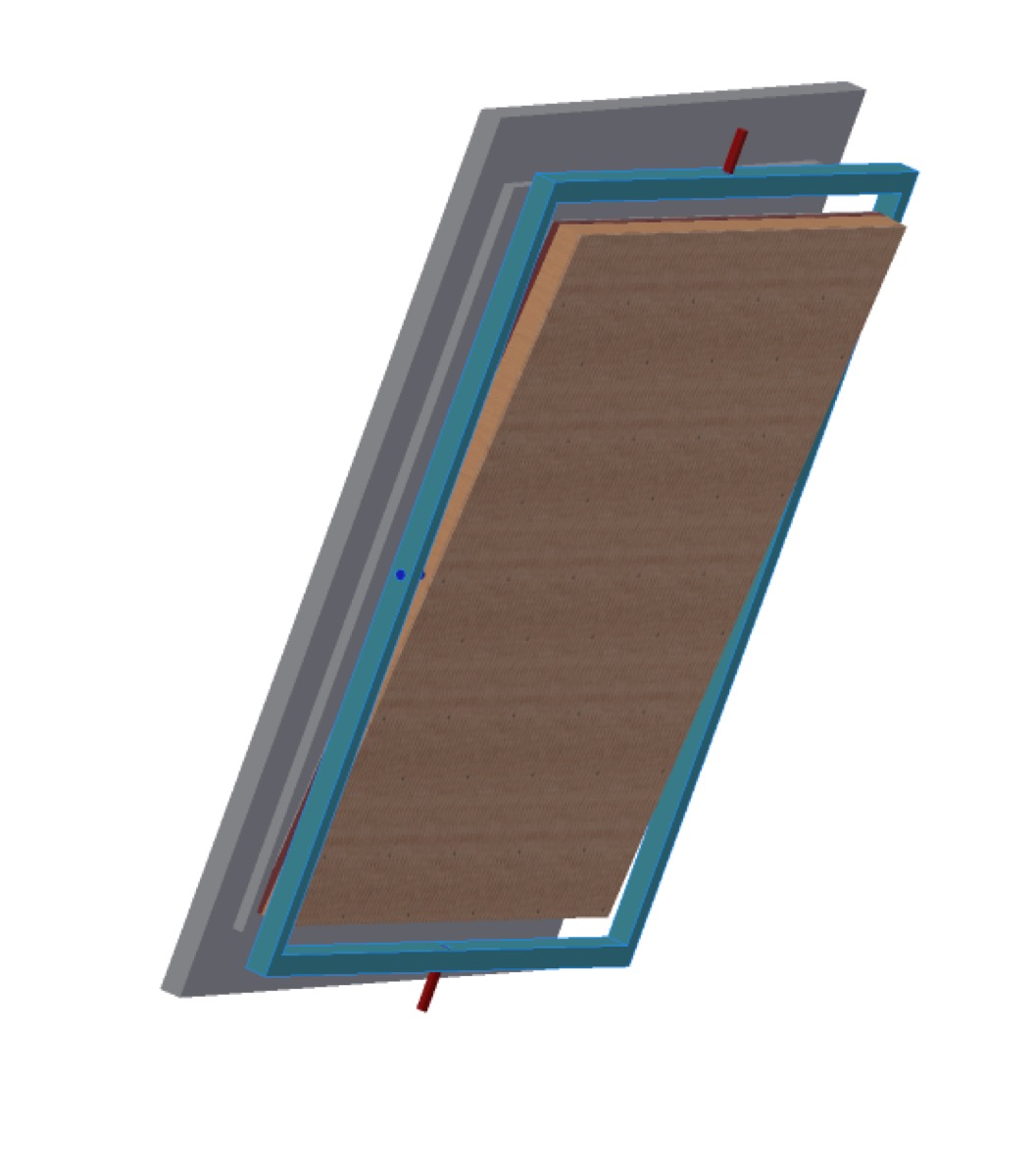
CAD model — isometric view with two-way glass
Interested in this work?
Inquire